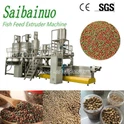
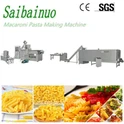
Single-screw extruder: suitable for single material and general livestock and poultry cooperative feed, twin-screw extruder: product excellent shape and beautiful appearance, coordinative feed with uniform maturity and adjustable density (aquatic products, pet food) and high value-added materials (starch, tissue protein) etc. The demand clarifies whether the above differences are positive or not. For example, we recommend using twin screw to produce aquatic feed, but now many companies use single screw to produce aquatic feed.
Many papers have introduced the differences between the two in aquatic feed production. In short, the twin-screw and single-screw have the following advantages:
1. High yield, up to 98% or higher.
2. - The granules are well formed and uniformly shaped. The twin screw extrusion pressure is very stable to ensure that the particles are formed together.
3. - Strong pumping ability of twin screw to ensure no reverse injection and blockage. After emphasizing the quality, the steam content in the guess is high. The single screw is prone to overflow and reverse spray in the feeding area, resulting in unstable material flow and blocking machine, while the twin screw will not occur similar situation.
4. It can produce all kinds of small particle products continuously and steadily. When the diameter of particles below 2mm is produced, the working condition of single screw is unstable, the yield will drop sharply and the material shape will become worse.
5. Density control is more stable and reliable. The material melts more abundantly and evenly in the twin screw barrel, which can accurately control the production of floating material, sinking material and slow sinking products.
6. Wide habits for formulation, more habitual for high-energy formulation production. Twin-screw can produce high-energy formulation with fat content of 11-13% (foreign materials can reach 17%), while single-screw generally does not exceed 6-8%.
7. - Easy to operate, stable production process.